References:
“Runoff from intensive farming contaminates rivers and groundwater, creating dead zones and threatening aquatic life.” — Conservation Institute (2025)
“More than 60% of EU farmland and 40% in the UK suffer from soil degradation linked to intensive agriculture, undermining their ability to store water and carbon.” - The Guardian
Christmas 2025
Show your compassion for the millions of birds who will loose their lives this Christmas time.
Sponsor a Turkey This Christmas
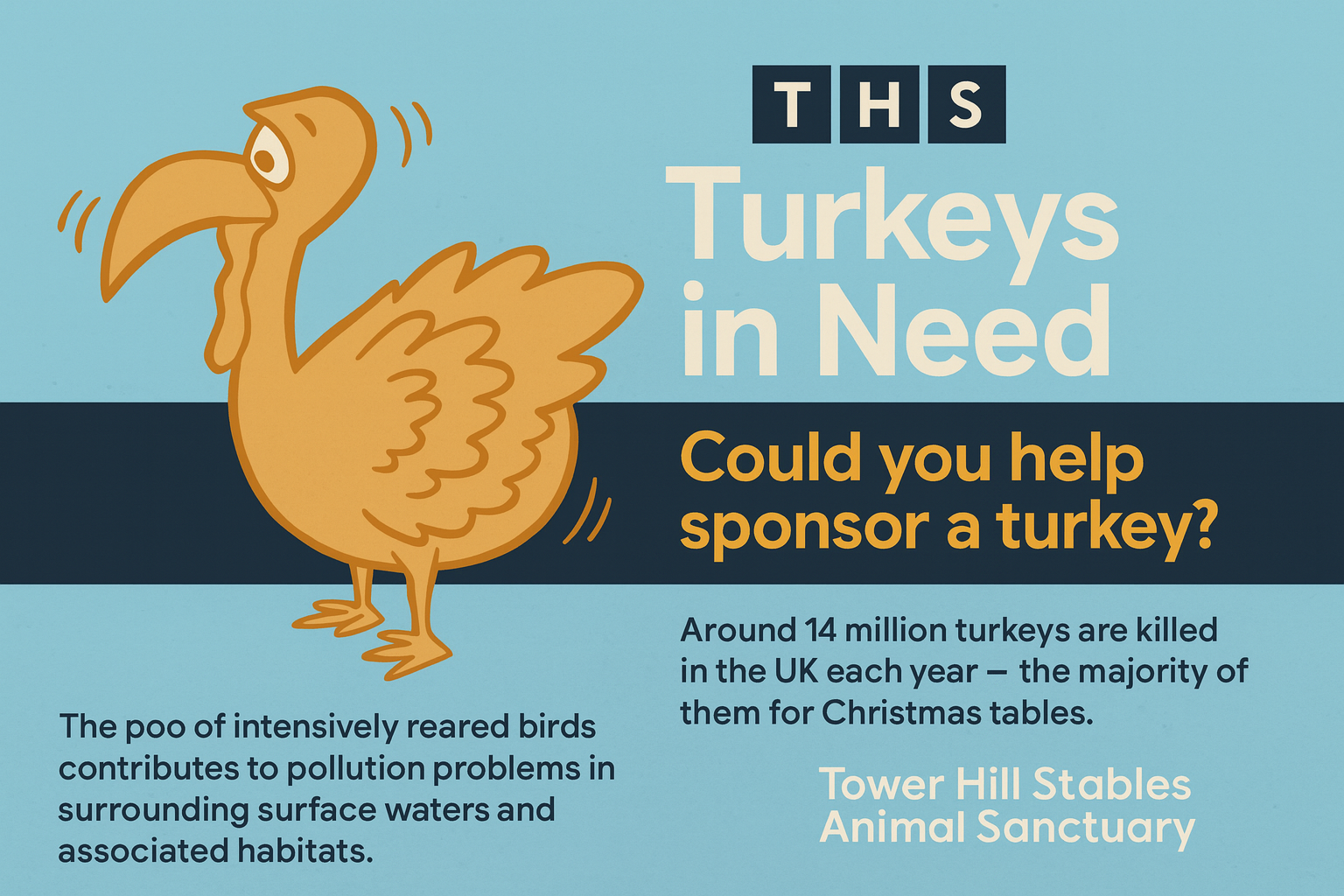
Every year in the UK, around 14 million turkeys are slaughtered — with 2 million killed just for Christmas dinner. At Tower Hill Stables, we offer a different story: one of rescue, sanctuary, and compassion.
The Reality Behind the Roast
Factory farming confines up to 25,000 turkeys in a single shed, often windowless and overcrowded.
Turkeys are slaughtered between 8 and 26 weeks old, far short of their natural 10-year lifespan.
Many suffer broken legs, blindness, and chronic pain due to rapid growth and mutilations like debeaking.
Environmental Impact of Turkey Farming
Each turkey produces 0.5–1 kg of manure per day — a farm of 10,000 birds generates up to 10 tonnes daily.
Runoff from turkey farms contaminates rivers and streams, introducing nitrogen, phosphorus, and pathogens that cause algal blooms and kill aquatic life.
Ammonia emissions from turkey waste contribute to air pollution, soil acidification, and respiratory issues in humans and animals.
Producing 1 kg of turkey meat uses 1,500–2,500 litres of water, straining local ecosystems.
Give the Gift of Life This Christmas: Sponsor a Tower Hill Turkey
A Christmas Tradition of Compassion
For Audrey, Tina, Delilah, Turner, and Rita, this Christmas is a celebration of life, safety, and freedom!
These beautiful, gentle birds are cherished residents at Tower Hill Stables Animal Sanctuary, where they will spend a safe, happy, and peaceful holiday season, far away from the traditional Christmas table. Instead of becoming a meal, they are thriving, enjoying comfortable shelter, nutritious food, and the company of their flock.
By sponsoring one of our Christmas Turkeys, you are choosing compassion and providing a life-saving gift that supports their care all year round.
Meet Our Wonderful Turkeys
Your sponsorship helps us give the best possible life to our entire flock. Get to know the special turkeys that you'll be helping:
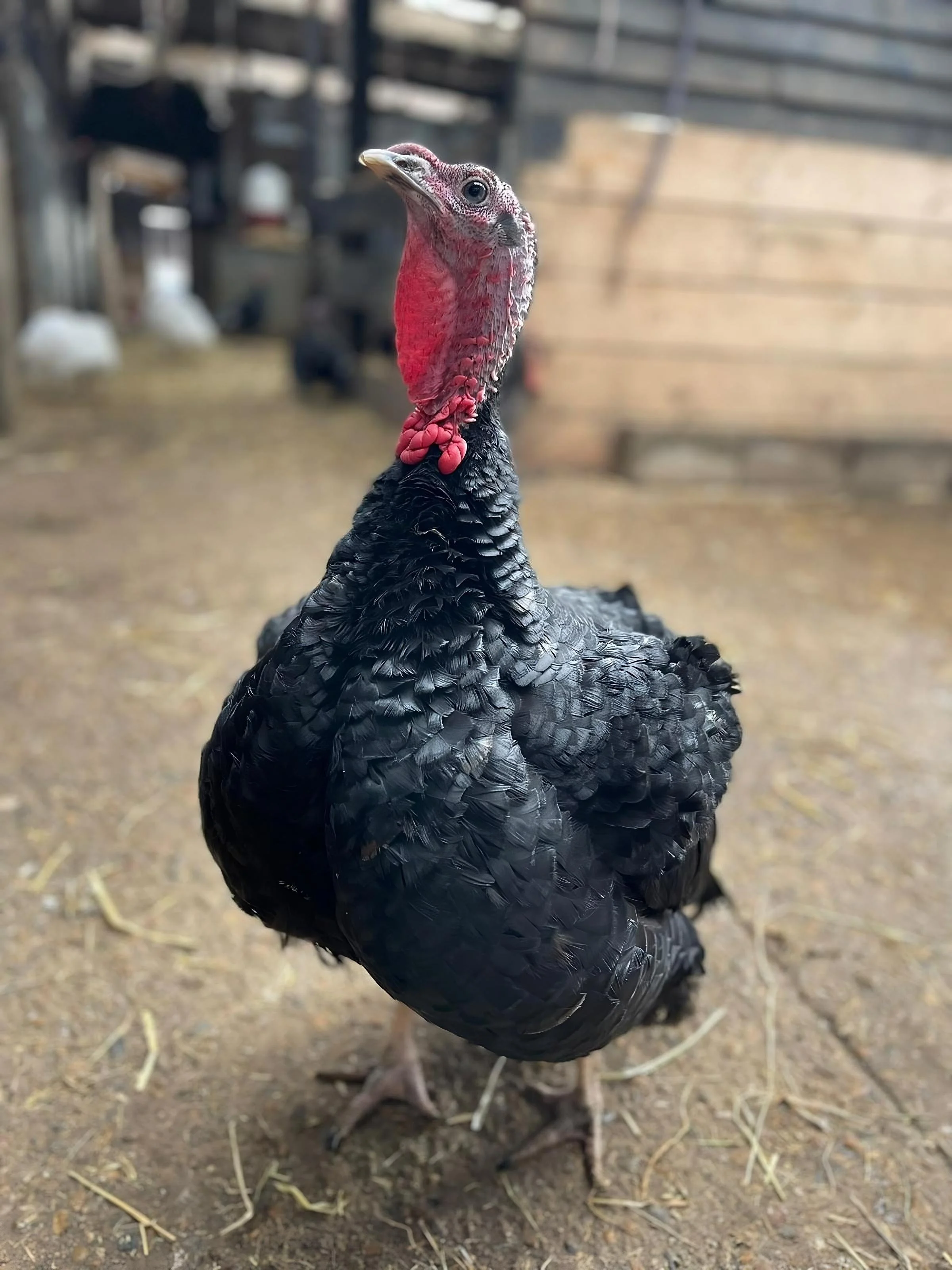
Audrey Our stunning black beauty. Audrey is known for her glossy feathers and her dignified, friendly demeanor. She loves a good dust bath and watching the world go by.
Tina, Turner, and Rita This trio of lovely white turkeys are inseparable! Tina is often found foraging in the grass, while Turner (the one with the magnificent snood!) and Rita are always close by, enjoying the safety of the sanctuary together.
Delilah With her striking grey and white heritage plumage, Delilah is one of the most distinguished members of the flock. She is a brave and curious bird who is often found perched up high, keeping a watchful eye over her friends.
What Your Sponsorship Provides
Turkeys require specialised care, particularly during the colder winter months. Your sponsorship is not just a symbolic gesture—it's a vital contribution that ensures our turkeys have everything they need to thrive:
Nutritious, high-quality feed to keep them healthy and strong.
Safe, warm, and dry bedding in their barn for cold nights.
Essential veterinary care and routine check-ups.
Enrichment and space to express their natural behaviours.
Sponsor a turkey today and give the gift of a safe, happy life this Christmas—and for all the Christmases to come!
You will have the option for a one off payment, or a monthly recurring payment which you can cancel at any time. if you choose a subscription, you will have to create an account to be able to manage the subscription and make any changes.
“Agrifood systems impose hidden costs of over $10 trillion annually — including environmental damage from emissions, land degradation, and water use.” — FAO, UN News (2023)